A racing wheelchair works with the athlete
Look at the handrim, the rolling wheel and the steering wheel as parts of the same system.
A racing wheelchair has a way for an athlete to add rotation without pushing on the tire. At the rear wheels, the hands meet separate rings called handrims. Force applied around a rim can turn the wheel, which then presses on the ground to move the chair. [2][3]
The Smithsonian’s Rolls 500 Sport chair is an earlier racing design. The modern three-wheel schematic helps pick out the major roles, while the historic chair reminds us that those roles have had more than one design answer. [1][2]
← Explore Racing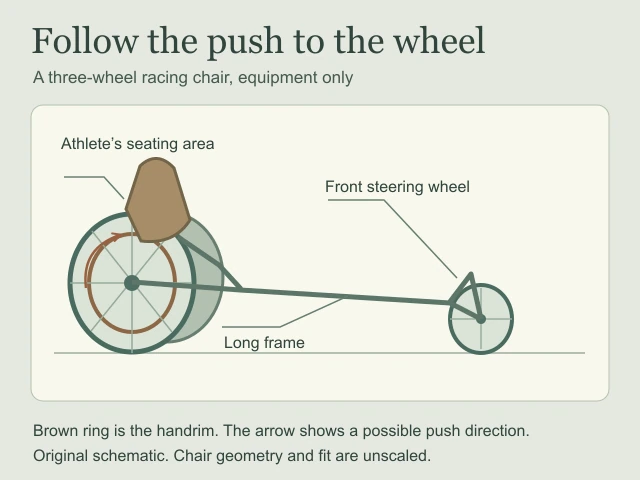
Original schematic of a modern three-wheel racing chair. No rider likeness, exact museum chair, equipment dimensions or fit specification is shown.
Original Manthoryn educational illustration · CC BY 4.0. CC BY 4.0 ↗ · Image source ↗
A few details change the picture.
Follow one contact at the rim
A push along the rim acts around the wheel’s axis. The wheel and the ground then exchange forces. The chair usually has a smaller third wheel at the front, which has a distinct support and steering job. This equipment division helps show where the athlete applies force and how the chair guides its movement. [2][3]
Straight running and turning use the same parts differently
During a race, a chair may need to hold a line and then turn on the course. Frame geometry, wheel arrangement and equipment setup matter, but a picture of a fast chair cannot tell us what works for every athlete. The athlete’s position and control are part of the system, and chosen arrangements vary by context. [2]
An athlete can be the equipment designer
Rausin studied the feel and durability of gloves she used when making contact with the rim. Her iterations were about factors she could notice through practice, such as fit and how the glove sat against a moving part. The design story begins with an athlete identifying and testing a problem. [3]
Compare equipment without rating people
The earlier museum chair, a modern conceptual drawing and an athlete’s glove are different kinds of evidence. Together they show how equipment works through the athlete’s choices and movements. None establishes an ideal for every body or race. [1][2][3]
Keep a little curiosity.
Enjoying a discovery is enough. These optional questions may become a deeper investigation.
Why might two racers who use the same type of chair prefer different handrim or glove contact surfaces?
The answer depends on the athlete, device and event. The diagram offers no individualized fitting, clinical or eligibility advice.
A complete CEL answer is not published yet.
Plant a Seed for this question →Sources & image notes.
Facts are tied to the references below. This is a source-checked editorial discovery, rather than an assessment or a claim of independent expert review.
- Rolls 500 Sport titanium racing wheelchair ↗
Smithsonian National Museum of American History. Named earlier racing wheelchair received in 1983 and catalogued materials and purpose.
Checked 2026-11-17. - Para-athletics explained: Wheelchair racing ↗
International Paralympic Committee. Custom chairs, steering hardware, athlete preferences and differing event demands.
Checked 2026-11-17. - Arielle Rausin’s Invention Fits Like a Glove ↗
Smithsonian Lemelson Center, from conversations with Arielle Rausin. Athlete-engineered evidence about comfort, fit and contact with the handrim.
Checked 2026-11-17.
Image provenance and modifications
Some collection cards show a labelled detail crop. The full image above retains its source framing.
Illustration
Original schematic of a modern three-wheel racing chair. No rider likeness, exact museum chair, equipment dimensions or fit specification is shown.
Original Manthoryn educational illustration · CC BY 4.0.
Creator/publisher: Original Manthoryn educational illustration / Manthoryn.
Source record · Original image · Original Manthoryn educational illustration, CC BY 4.0. No photograph, brand artwork, athlete likeness or proprietary diagram reproduced.
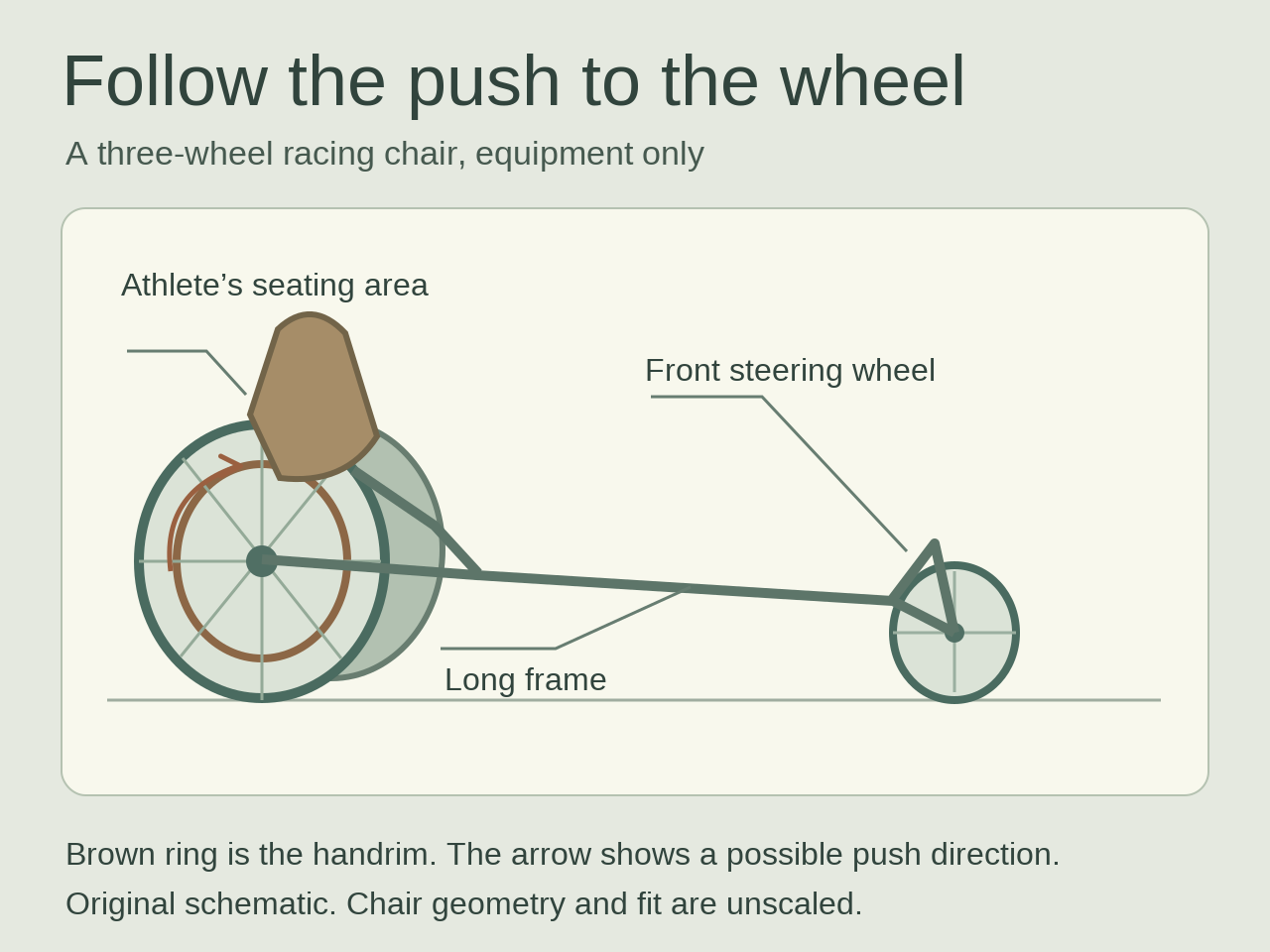
Changes: Original labelled SVG rasterized to two WebP widths without cropping.
Rights/source metadata checked 2026-11-17. Images identify the object or work; factual claims rely on the editorial references.
Discovery entry.ce3-sports-wheelchair-racing-chair · revision 1.0.0. Raise a content or image concern →. This prepares a local note; no report is delivered.