A racing swimsuit and the drag you can measure
A fabric seam can change one kind of drag. That does not tell you a race time.
The surface of a swimsuit sits where the swimmer meets the water. One question is what happens when fluid moves past relatively flat fabric or a raised seam. Another is what happens when the swimmer’s whole shape and motion change. Those questions benefit from different experiments. [1][2]
The 2008 Speedo LZR Racer is a documented attempt to change several things at once. NASA Langley worked on some tests of fabrics and seams. That is a useful entry into the design without treating a comparison in a test rig as a prediction for every swimmer. [1][2]
← Explore Swimming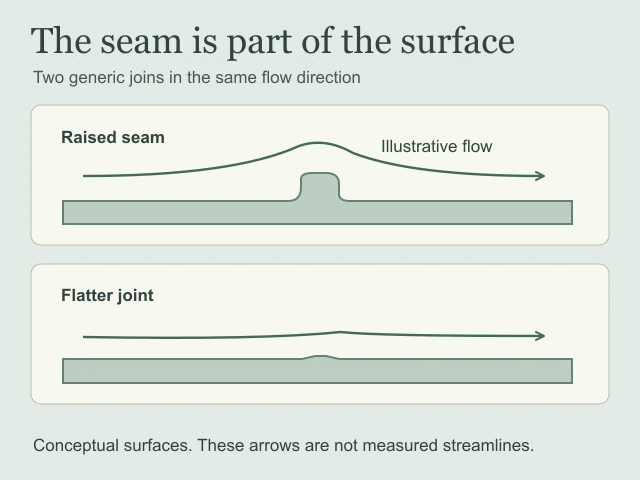
Original comparison of two generic surfaces. The pictured seams are illustrative, with no LZR branding, speed measurements or real swimwear pattern.
Original Manthoryn educational illustration · CC BY 4.0. CC BY 4.0 ↗ · Image source ↗
A few details change the picture.
Surface shape can change the nearby flow
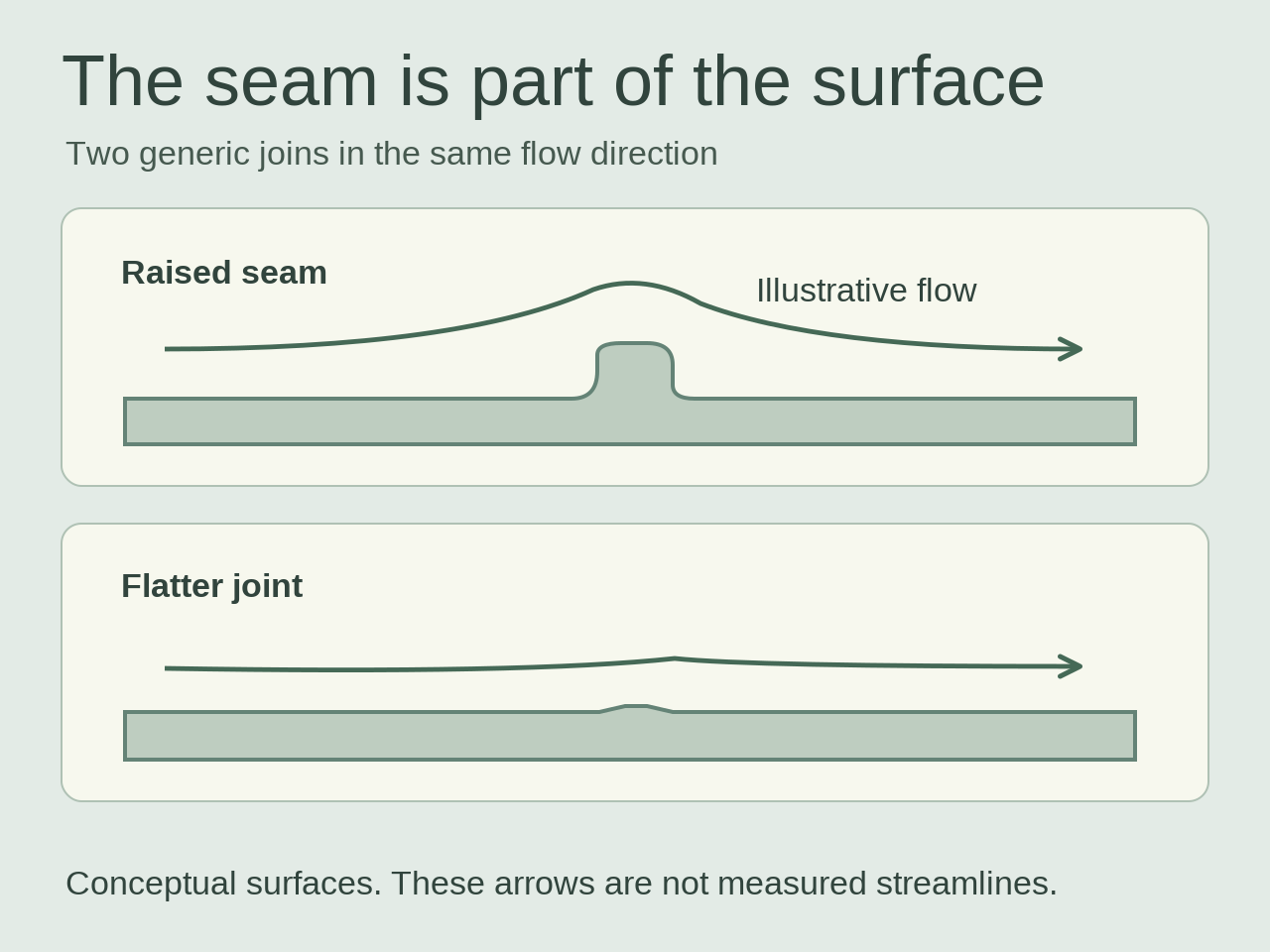
Water moving past an athlete produces resistance. Some resistance is associated with the surface and the fluid immediately next to it. A raised join and a flatter join can disturb the local flow differently under the same conditions. That small comparison is the idea in the illustration. [1]
Give the test a job it can answer
The NASA team ran tests using fabric and joining methods in a wind tunnel. Other work for the suit involved water testing and computer analysis. The wind-tunnel comparison helps rank pieces under stated conditions. A swimmer in a pool brings additional factors such as body shape, orientation and changing movement. [1][2]
Many variables move a finish time
Seam placement was one of several design choices. A race time also reflects the person, event and conditions. A material effect can be worth measuring without asking it to explain an entire result. Comparisons that mix many changed factors leave room for competing explanations. [2][1]
An era of rule changes
The period’s equipment development prompted FINA to revisit material rules. The historical decision is part of the design story because it changed what manufacturers were asked to make. It does not establish whether a garment is permitted at a particular competition today. [3][2]
Keep a little curiosity.
Enjoying a discovery is enough. These optional questions may become a deeper investigation.
What would you hold constant to compare two suit surfaces without confusing seam effects with swimmer movement?
The case is historical and educational. The drawing supplies no health, training or current eligibility advice.
A complete CEL answer is not published yet.
Plant a Seed for this question →Sources & image notes.
Facts are tied to the references below. This is a source-checked editorial discovery, rather than an assessment or a claim of independent expert review.
- Space Age Swimsuit Reduces Drag, Breaks Records ↗
NASA Spinoff 2008, Langley Research Center. Testing of flat fabric, stitched and bonded seams, and distinction between air tests and further water and computer work.
Checked 2026-11-17. - The Impact of Invention on Sport ↗
Smithsonian Lemelson Center. Construction of the 2008 LZR Racer and the historical controversy around competing suits.
Checked 2026-11-17. - FINA Bureau Meeting, 31 July 2009 ↗
FINA, now World Aquatics. Historical textile-only material criteria and changes arising from the period’s swimwear decisions.
Checked 2026-11-17.
Image provenance and modifications
Some collection cards show a labelled detail crop. The full image above retains its source framing.
Illustration
Original comparison of two generic surfaces. The pictured seams are illustrative, with no LZR branding, speed measurements or real swimwear pattern.
Original Manthoryn educational illustration · CC BY 4.0.
Creator/publisher: Original Manthoryn educational illustration / Manthoryn.
Source record · Original image · Original Manthoryn educational illustration, CC BY 4.0. No photograph, brand artwork, athlete likeness or proprietary diagram reproduced.
Changes: Original labelled SVG rasterized to two WebP widths without cropping.
Rights/source metadata checked 2026-11-17. Images identify the object or work; factual claims rely on the editorial references.
Discovery entry.ce3-sports-racing-swimsuit-drag · revision 1.0.0. Raise a content or image concern →. This prepares a local note; no report is delivered.